How our personal training programme works
Six parts, in the order you meet them: the assessment, the training, the food, who owns the plan, what happens between sessions, and how you know it is working.
Personal training is sold as sessions and delivered as a process. The session is the hour you see. The programme is everything that decides what happens in it: what your starting point actually is, what the plan is building towards, and what changes when a week falls apart.
Six parts
What a personal training programme includes
Nothing here is unusual. It is simply written down, so you can hold any coach to it, here or anywhere else.
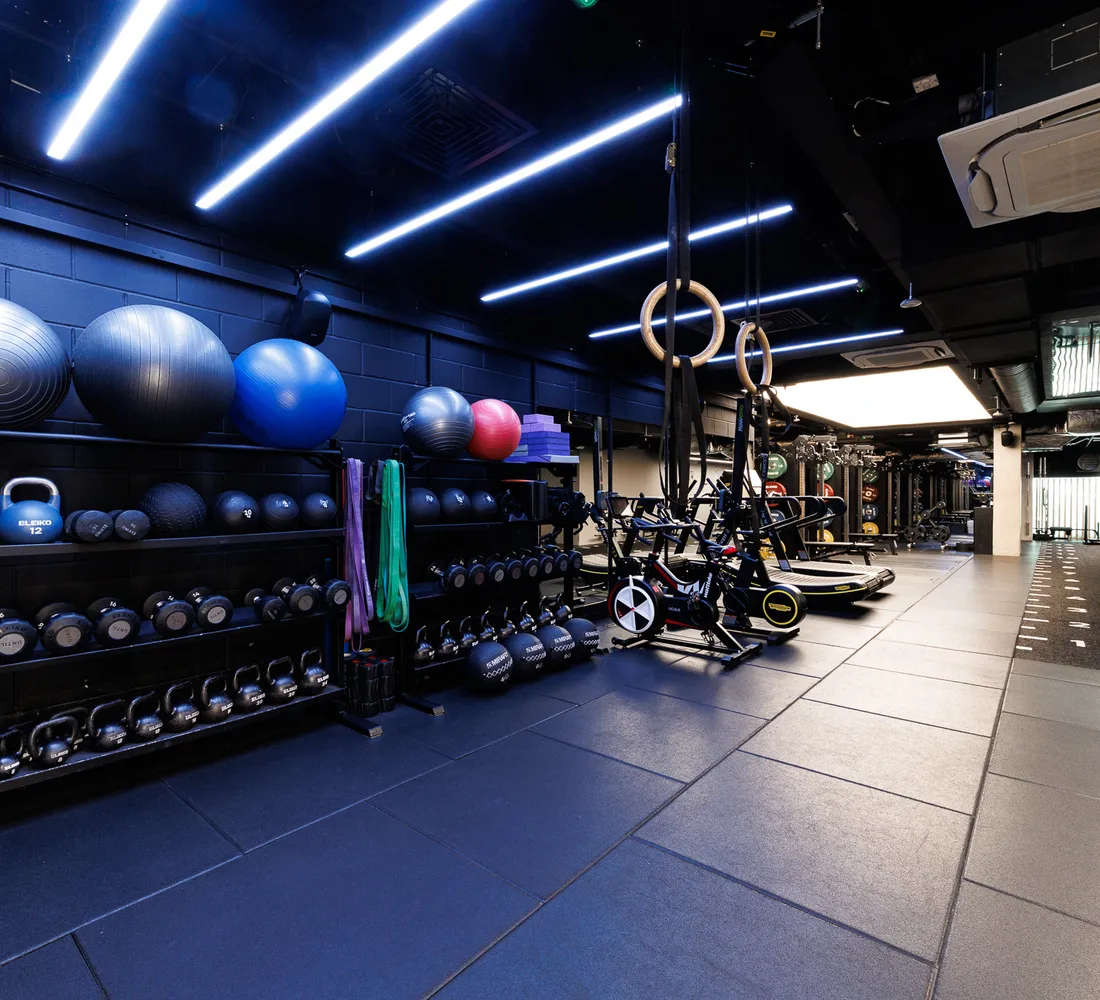
01 / Assessment
It starts with a fitness assessment
The first session is mostly questions and movement. Training history, injuries, what your week looks like, how you sleep, how you actually eat.
You leave it knowing what your coach found and what the first block is going to do about it. A punishing workout designed to prove the sessions are hard tells you nothing you can use.
- Your history in fullInjuries, surgeries, and what you have already tried.
- A movement screenHow you squat, hinge, push and pull, before any load goes on.
- A baseline worth keepingThe starting numbers everything else is measured against.
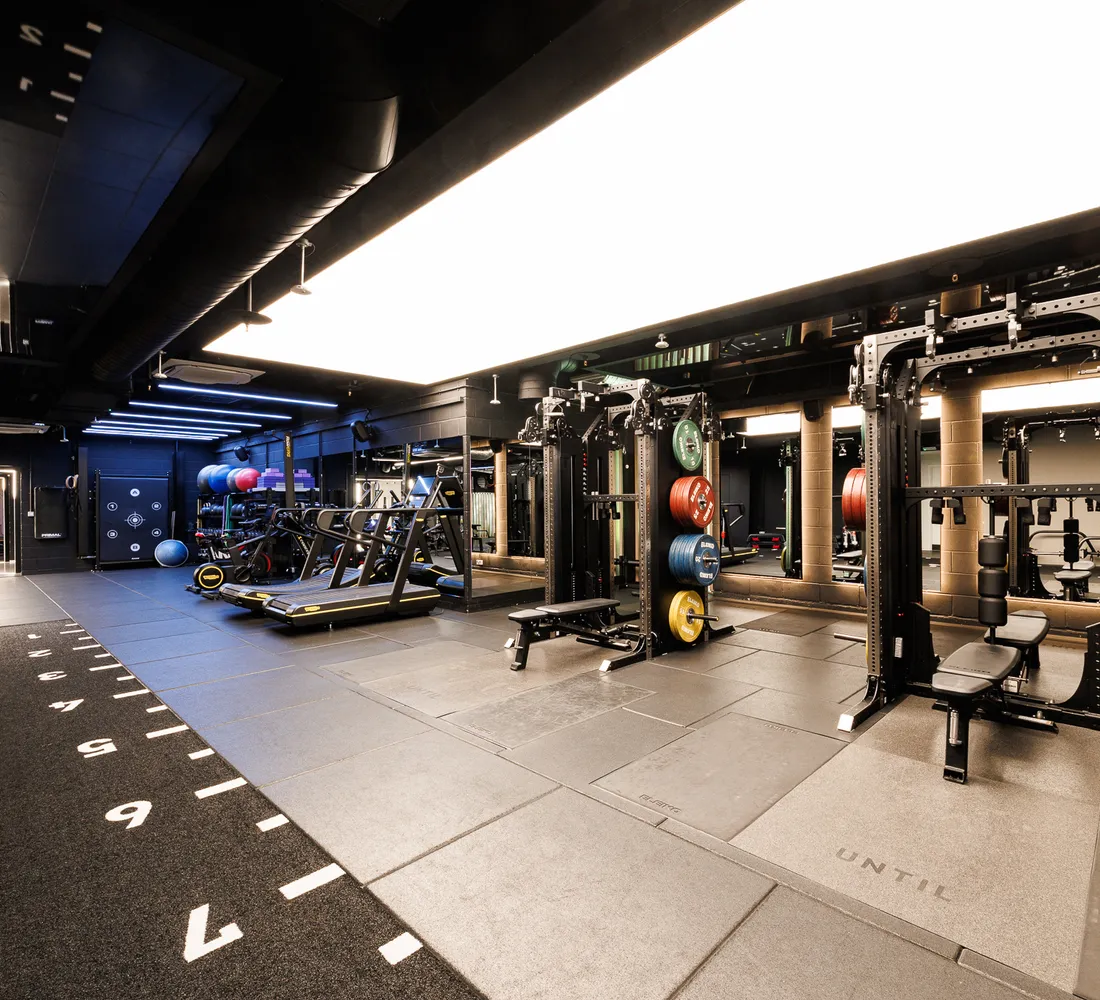
02 / Training
A plan built around your week
Two or three sessions a week is enough to change how you look and what you can lift, as long as the sessions are programmed rather than improvised.
Progression is written down before you start: what load goes up, when, and what happens in the weeks it does not. That is the difference between training and just working out.
- Two or three hoursTwo or three sessions a week, built around a job.
- Progression on paperA twelve week block with a shape, written before you start.
- Rebuilt when life movesTravel and late meetings change the plan, not the goal.
03 / Nutrition
Food you can keep eating in real life
Nutrition is where most people come unstuck, usually because the plan was written for a life nobody actually has. No photocopied meal plans here, and no banned foods.
You get targets that match your goal and your size, and a way to hit them around client dinners, travel and the odd blowout. The aim is a way of eating you still use after the block ends.
- Targets, not menusCalories and protein set to your goal. You choose the food.
- Built for your diaryEating out, hotels and late finishes, planned for in advance.
- Adjusted as you changeTargets move as your weight and training load change.
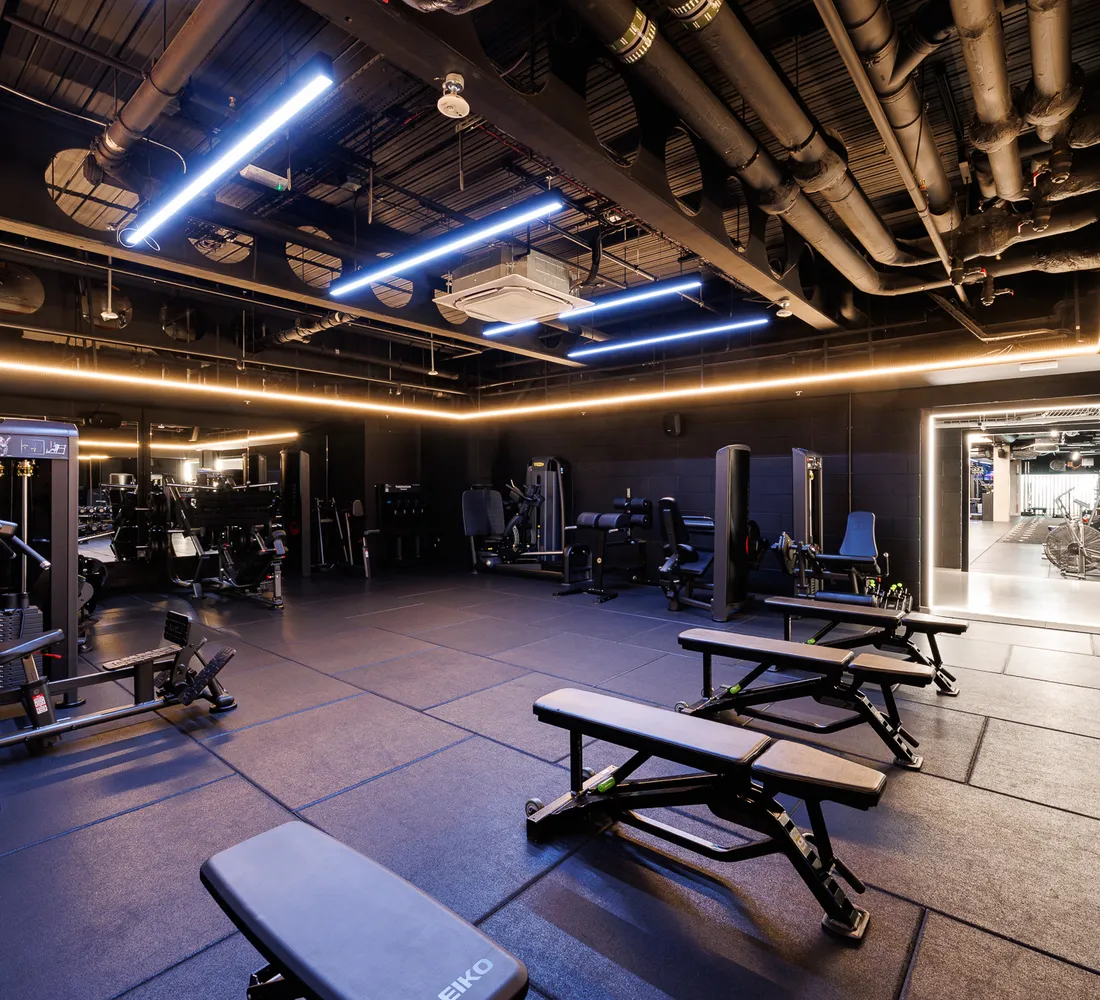
04 / Ownership
One coach owns the whole plan
Your coach runs the training, the nutrition guidance and the measurement together, so nothing falls between two people who each assumed the other had it.
They also explain the decisions. If you ask why an exercise is in the programme, the answer should be in plain English, and it should mention you.
- One person responsibleOne coach for the training, the food and the numbers.
- Decisions explainedWhy this exercise, this load, this week, in plain English.
- Adjusted between sessionsThe plan moves when your results or your diary do.
05 / Accountability
What happens between the sessions
Most programmes fail in the gaps rather than in the gym. Three hours a week are coached. The other hundred and sixty five are yours, and that is where results are usually won or lost.
So the check-in rhythm gets agreed at the start: how often you report in, what you send, and what your coach does with it. Somebody expecting you is a large part of what you are paying for.
- An agreed rhythmYou and your coach set how often you report in.
- A plan for bad weeksA wrecked week gets a smaller plan, not a fresh start.
- Someone expecting youThe simplest reason people keep going in week nine.
06 / Measurement
Progress you can see in the numbers
Sessions get logged: the exercises, the loads, the reps. Measurements get taken on a schedule that matches your goal, whether that is the scale and the tape, what you can lift, or how you feel at 3pm.
At the end of each block you review the log together and decide what the next one does. Sore and sweaty is not evidence. The log is.
- Every session loggedWhat you lifted, and for how many, every session.
- Measures that fit the goalWeight and tape, loads, or energy and sleep. Your goal decides.
- A review every blockTwelve weeks in, the numbers decide what changes next.
Where to start
The first conversation is a conversation, not a workout. You describe what you want to change and what your week can actually hold, and the coach tells you what a realistic first block looks like.
If you are still deciding who to work with, the guide to choosing a trainer is the better page to read first.
Talk to us about startingFAQ
Common
questions
How many sessions a week do I need?
Two or three is the usual range for a working week, and it is enough to change body composition or strength when the sessions are programmed properly. One a week works if you also train on your own. Your coach sets the number against your goal and the time you actually have.
Do I get a nutrition plan as well as training?
You get nutrition guidance built around your life rather than a photocopied meal plan. That means targets for calories and protein, practical ways to hit them when you are eating out or travelling, and adjustments as your body and your results change.
How is my progress measured?
Every session is logged, so loads and reps can be compared week to week. Alongside that, your coach takes measures that match your goal: weight and tape for body composition, key lifts for strength, or energy and sleep for health. Each block ends with a review.
What happens if I miss a week?
The plan flexes and carries on. A week away or a wrecked diary gets a shorter plan you can keep, rather than a restart. Missing sessions is normal over a twelve week block, and the programme is built expecting it rather than treating it as failure.
Get Started
Ready to start?
Book a free matching call.
Personal Training Soho • UNTIL, 111 Charing Cross Road, London WC2H 0DT
EnquireThe matching call is free, and you do not need an UNTIL membership.